
Conveyor automation helps remove repetitive handling, reduce bottlenecks, and keep production moving consistently. But those gains only happen when the system suits the material and the way the operation runs. Otherwise, even a well-intentioned upgrade can lead to avoidable downtime and ongoing maintenance issues.
That’s something we’ve seen repeatedly at https://www.rud.com.au. In this guide, we’ll cover the core benefits of conveyor automation and the scenarios where it makes the most operational sense. We’ll also walk you through what to keep in mind before committing to a system.
Let’s start with one of the most immediate benefits: product quality.
Why Automated Conveyor Systems Produce More Consistent Quality
Automated systems improve product quality by removing the variability introduced by manual handling. Unlike manual movement through a production line, automated conveyors maintain consistent speed, positioning, and handling throughout every shift. This consistency reduces the common sources of quality variation, including:
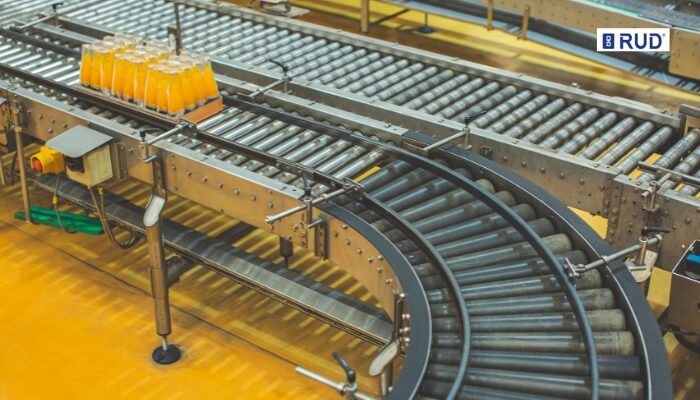
- Consistent Cycle Execution: Automated conveyors perform the same motion, speed, and positioning on the ten-thousandth cycle as they do on the first. Because the system doesn’t rely on human operation, performance remains stable across long production runs, even as workload increases over a shift.
- Real-Time Detection: Sensors monitor product placement, orientation, and irregularities as materials move through the system. This monitoring capability allows you to catch issues at the point of occurrence, so defects don’t progress further down the line.
- Controlled Material Handling: Consistent positioning and controlled movement reduce handling variation that can damage materials and compromise output quality during transit.
Together, these factors reduce dependence on operator variation and shift consistency to system design and process control.
How Conveyor Automation Improves Throughput and Operational Efficiency
Conveyor automation improves throughput by reducing the small inefficiencies that manual processes struggle to control. Over time, those inefficiencies build across every shift and reduce overall output. Automated systems address this most directly through bottleneck reduction and real-time monitoring. Let’s look at both.
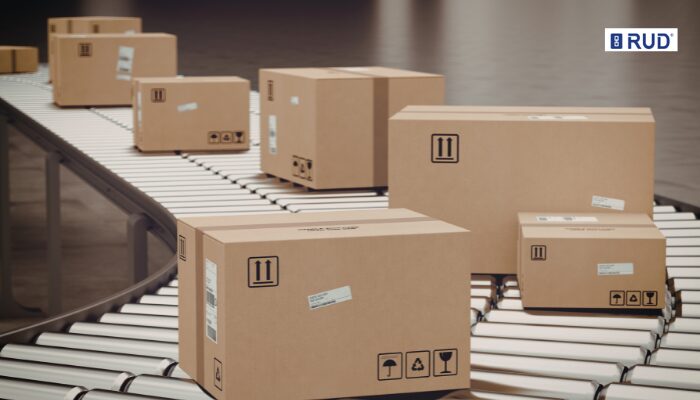
Cutting Out Bottlenecks with Automated Systems
Transfer points and sorting stages are where manual processes struggle most to keep pace. Automated sortation and accumulation systems help regulate product flow, so the line keeps moving even during demand spikes.
On top of that, programmable logic controllers coordinate multiple conveyor stages through a single integrated system. This coordinated control removes the gaps that manual handling cannot consistently close.
Real-Time Data That Keeps Your Line Moving
Live monitoring gives your team visibility across the entire line, covering speed, flow rates, and equipment status in one place. When something shifts outside normal operating parameters, the system flags it before it develops into a larger disruption.
The same data also tracks long-term performance trends, so your team can schedule maintenance around production instead of reacting to unexpected shutdowns.
Worker Safety Improves Without Slowing Production Down
Working on an industrial conveyor line regularly involves heavy lifting, repetitive movement, and close proximity to active machinery. These are the conditions most associated with serious workplace injuries in Australia. Industrial automation reduces direct human intervention in these environments, and the safety outcomes reflect that.
Those improvements typically come from four areas:
- The Scale of the Problem: Safe Work Australia reports 84% of all serious workers’ compensation claims involve body stressing, falls, hits from moving objects, or mental stress. Automated conveyor systems reduce worker exposure to these risks by limiting direct interaction with hazardous tasks and equipment.
- Reduced Physical Strain: Automating repetitive tasks like heavy lifting and material transport removes the physical demands that build up during a shift. Over time, that reduction in strain lowers injury risk for workers on the floor.
- Built-In Safety Features: Automation systems include emergency stops, sensors, and interlocks that help prevent collisions and mechanical hazards before they reach workers. These features run continuously and don’t depend on a worker noticing a hazard first.
- Fewer Workers in Hazardous Zones: High-risk material movement is where industrial robots and automated systems earn their place. The fewer workers near active machinery and heavy loads, the lower the exposure.
In practice, you don’t need to compromise production output to improve workplace safety. Many facilities find that removing workers from repetitive and high-risk tasks improves both. In fact, a 10% increase in automation has historically corresponded with a nearly 2% decline in workplace injuries.
Ultimately, addressing safety risks early during system design helps create an operation that remains productive without increasing worker risk.
Automated Conveyor Systems Adapt More Easily to Changing Demand
Production demands shift constantly. If your facility can’t reconfigure lines quickly, you’ll absorb that inflexibility through lost time and reduced output.
Modular conveyor designs address this directly. You can add, remove, or reposition individual sections without rebuilding the entire system, which keeps reconfiguration fast and far less disruptive. For operations across food processing, mining, or logistics, this flexibility is especially useful when product lines change or order volumes spike without much warning.
This flexibility operates on two levels. The first is physical flexibility, where sections can be added, removed, or repositioned as needed. The second is smart automation, which lets you adjust speed, routing, and capacity through system controls without touching the line itself. So when seasonal demand spikes or a new component is introduced, the line adapts without downtime.
And as your operation grows, modular systems scale with you. That means you can add capacity where you need it without replacing what’s already working.
Why Conveyor Automation Delivers Long-Term ROI:
The return on conveyor automation builds across multiple cost areas. Labour costs are often one of the first areas where businesses notice the impact. This is especially true in Australian manufacturing, where wage growth has reached a 16-year high.
Automated systems reduce reliance on manual labour for repetitive tasks, which makes those rising costs easier to absorb. Here’s where the return typically comes from:
| Cost Area | How Automation Helps |
| Labour Costs | Cuts down manual handling requirements throughout shifts |
| Energy Efficiency | Smart systems optimise motor load and run cycles to cut energy use |
| Maintenance | Predictive maintenance helps prevent unplanned repair costs |
| Waste and Rework | Consistent handling lowers defect rates and material waste |
| Installation and Scaling | Modular units simplify and lower the cost of future line changes |
The financial return doesn’t come from one large saving. It builds through reduced labour costs, fewer errors, lower energy consumption, and less unplanned downtime.
From our experience across Australian facilities, the cost benefits of automation usually become visible within the first 12 months. In most cases, that’s just the starting point, with savings tending to compound as the system settles into full operation.
Making Conveyor Automation Work for Your Operation
The right conveyor system reduces the friction that costs your operation time and money across every shift. But that outcome depends on matching the system to your material, environment, and the way your line runs.
Specification is where most implementations succeed or fall short. Getting that right means understanding what you’re moving, how it’s handled, and how the system needs to interact with everything already running on the floor. RUD Australia has the experience to work through those specifics with you.
If you’re evaluating automation for your facility, get in touch with our team to discuss your application.